HBF TECHNICAL CONFERENCE 2026
Competence, collaboration and compliance at HBF Tech Conf
Competence is set to be a key focus for all technical aspects of homes delivery, according to Stephen Andrew, Taylor Wimpey’s group technical director.
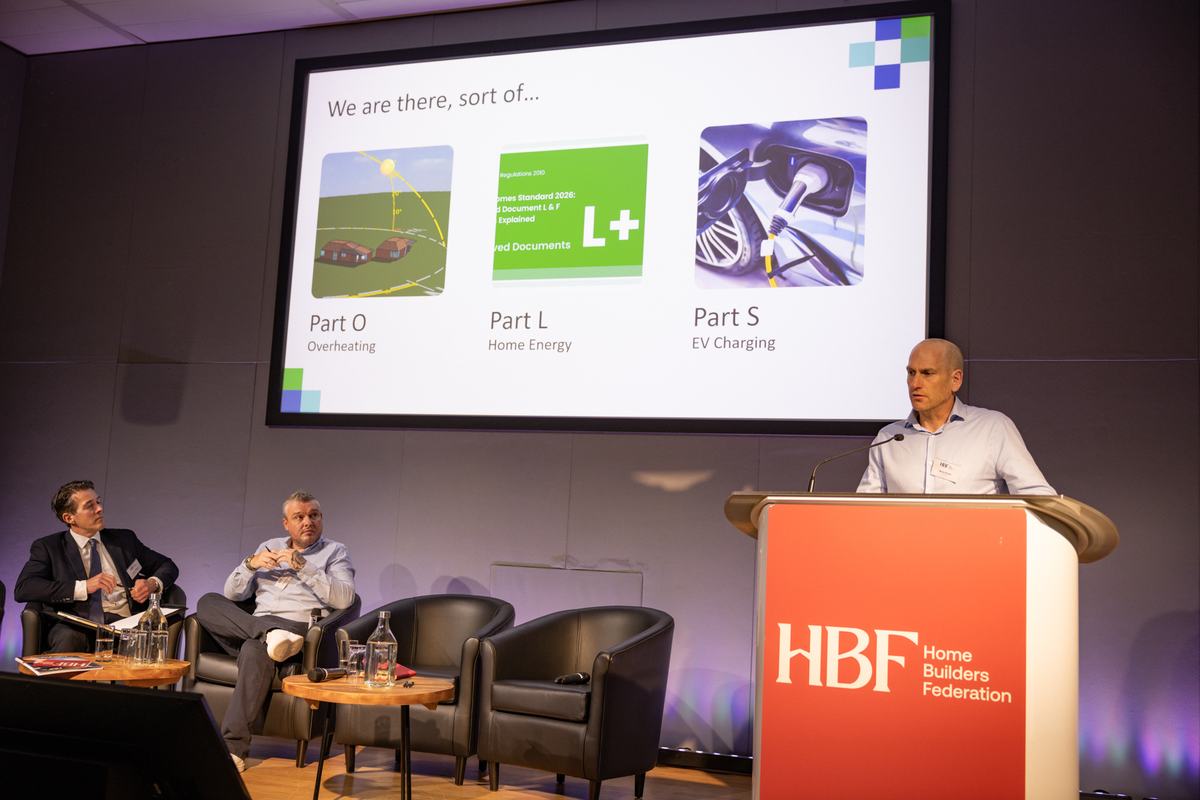
Speaking at the Home Builders Federation’s Technical Conference in Birmingham, Andrew, part of a panel on the Future Homes Standard, said ensuring competence was not “just a building safety conversation. I think that conversation is spreading across everywhere else”.
For the industry this would mean good “record keeping” and for Taylor Wimpey “competency of myself, technical teams and contractors”.
In an example, Andrew pointed to the requirements under Part L 2021 to provide photographic evidence at every critical stage of construction. “We deployed this across fire safety as it’s the right thing to do.”
Under the Building Safety Act 2022, competence is a mandatory requirement, with individuals designing, constructing and maintaining buildings needing to demonstrate relevant skills, knowledge and experience.
Andrew joined a panel which included Ross Holleron, head of homes and construction at the Future Homes Hub and Ryan Mee and Claire Enstone, Eco2Solar’s ceo and director of technical respectively.
Andrew also noted the level of collaboration the industry had achieved through the HBF and Future Homes Hub, on the approach to the FHS - “a difficult set of regulations for us all to adapt to”.
He also reflected: “I probably haven’t previously seen that level of engagement from government [regarding the FHS] with industry.”
Collaboration would indeed be the route to success with the FHS, stated Ross Holleron, as well as “more processed systems”.
Holleron looked at how the Hub was supporting both the industry and customers with the incoming FHS. He said: “We need to make sure that everyone in the process has the information they need in the format they need, whether it’s a guide or a webinar, so your teams are lined up and ready to go with the Future Homes Standard.”
Acknowledging that it was “easy for us to get obsessed with one aspect [of the environment agenda]”, with the FHS seeming all-encompassing, Holleron said the Hub was also continuing to explore other elements, including embodied carbon and biodiversity.
On building safety, Hollis’ Dr Benjamin Ralph and Nathan Hooper assessed the gateway approval processes of the Building Safety Regulator. Gateway two (pre-construction) approval rates had “significantly improved” from the long waits of last year, Hooper said, but were “still not meeting the statutory timeframe” of 12 weeks.
For the 12 weeks to August 1, the average approval timeframe was 22 weeks against 43 weeks a year previously. Currently, no new build applications for high rise buildings have passed through the final gateway (gateway 3 – pre-occupation) stage.
Ralph looked at the common causes of stalled or incomplete gateway two applications. These included invalid information, out of date fire strategies or applications that did not adequately explain the design. “Is [the problem] validity, design maturity, missing evidence or a lack of narrative?”
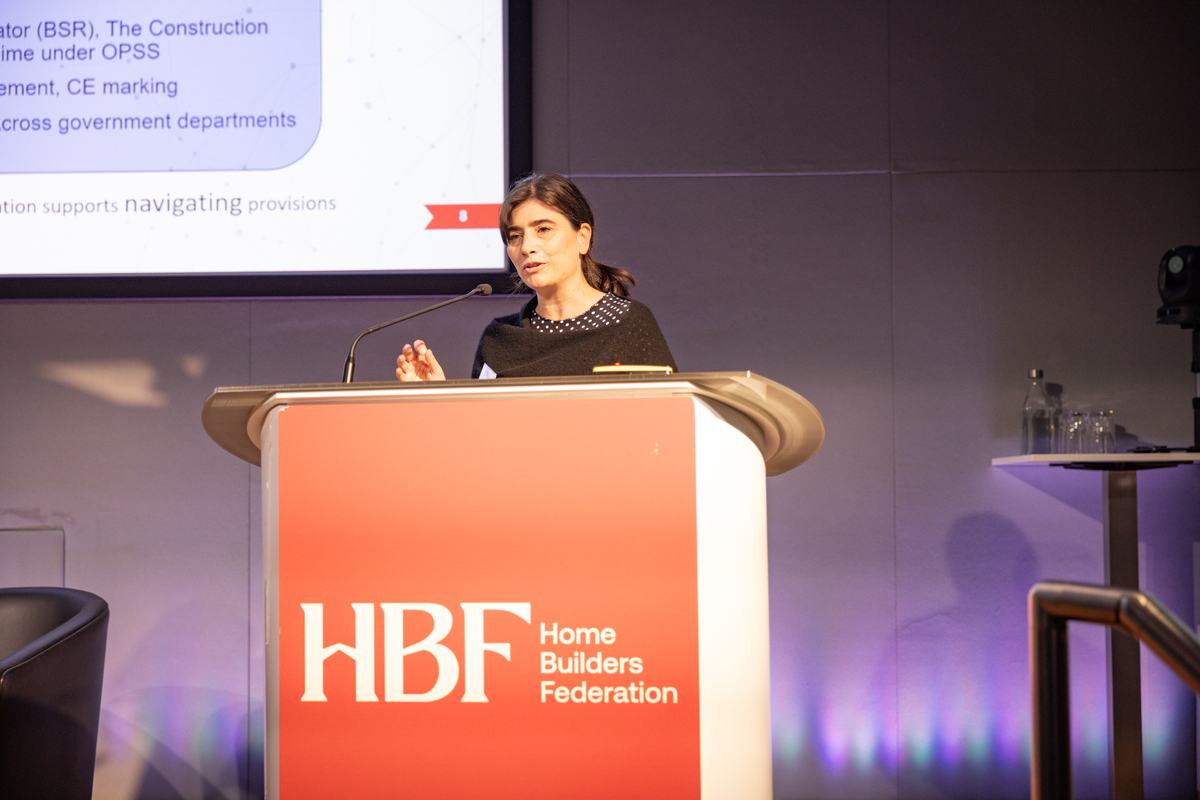
Colin Jones, partner, head of construction and engineering at HCR Law, gave an overview of the Building Safety Act regulations – “the most significant reform to building safety in a generation” - and what is expected next. Construction product regulations – affecting all products - are anticipated for 2027; Jones noted that presently, two thirds of construction products were unregulated.
And Julie Bregulla, BBA’s chief operating officer, looked over this changing landscape “in which we trade products and systems”. The new regulatory framework suggested a shift to a “command and control” approach, she said.
HBF’s Technical Conference also featured a panel on water challenges, an issue rapidly increasing in importance for housebuilders. In another reference to competence, the expert panel touched upon a possible “competency gap” around water regulations and plumbing skills.
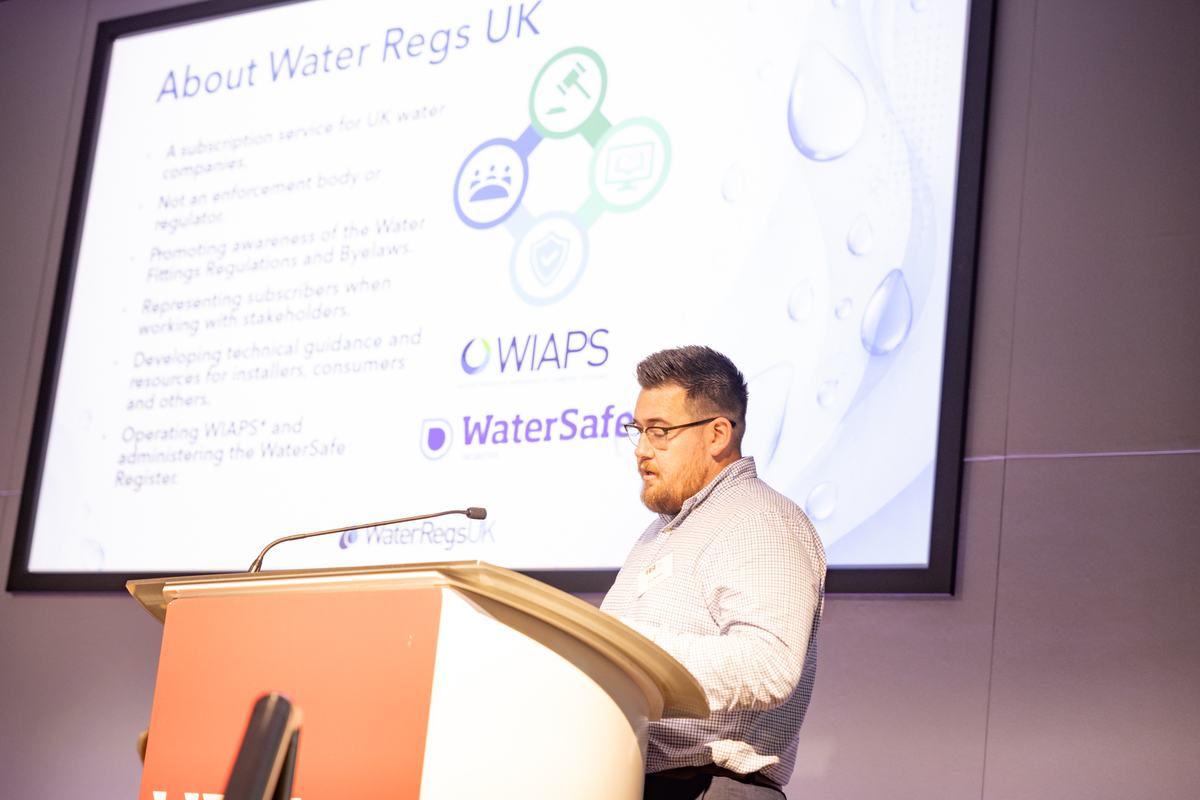
On this, Lee Brooks, head of technical compliance at Water Regs UK, pointed out that water supply fittings regulations should be familiar - they had been in place since 1999. But it was also discussed that systems could become non-compliant through customer interaction.
The panel, also featuring Natalie Elphicke Ross, chair of the Housing & Finance Institute, Callum Parker, associate director of Brookbanks and Martyn Neil, business development director of Wavin, considered water efficiency, sustainable drainage systems, the water regulatory framework, water stewardship and the issues surrounding water reuse to drive down consumption in new homes to low levels.
On the latter, the panel mulled over necessary regulatory change and the risk of cross contamination.
“There’s been a piecemeal approach” to water, Elphicke Ross commented. “We need to look at it in much more of a total water space”, including in planning and other aspects of homes delivery.
The water industry was fragmented, the panel agreed, with various bodies involved in its management and delivery. “Unless it’s overseen by a single body, there won’t be the ability to invest properly,” Neil said. “You’ll never be able to protect water supply.”
Elphicke Ross pointed to the Clean Water Bill, announced in this year’s King’s speech, as a “good baseline” for improving regulations and aiding homes delivery. She said: “We need homes and [water intensive] data centres. We can do that while looking after the environment and water.”
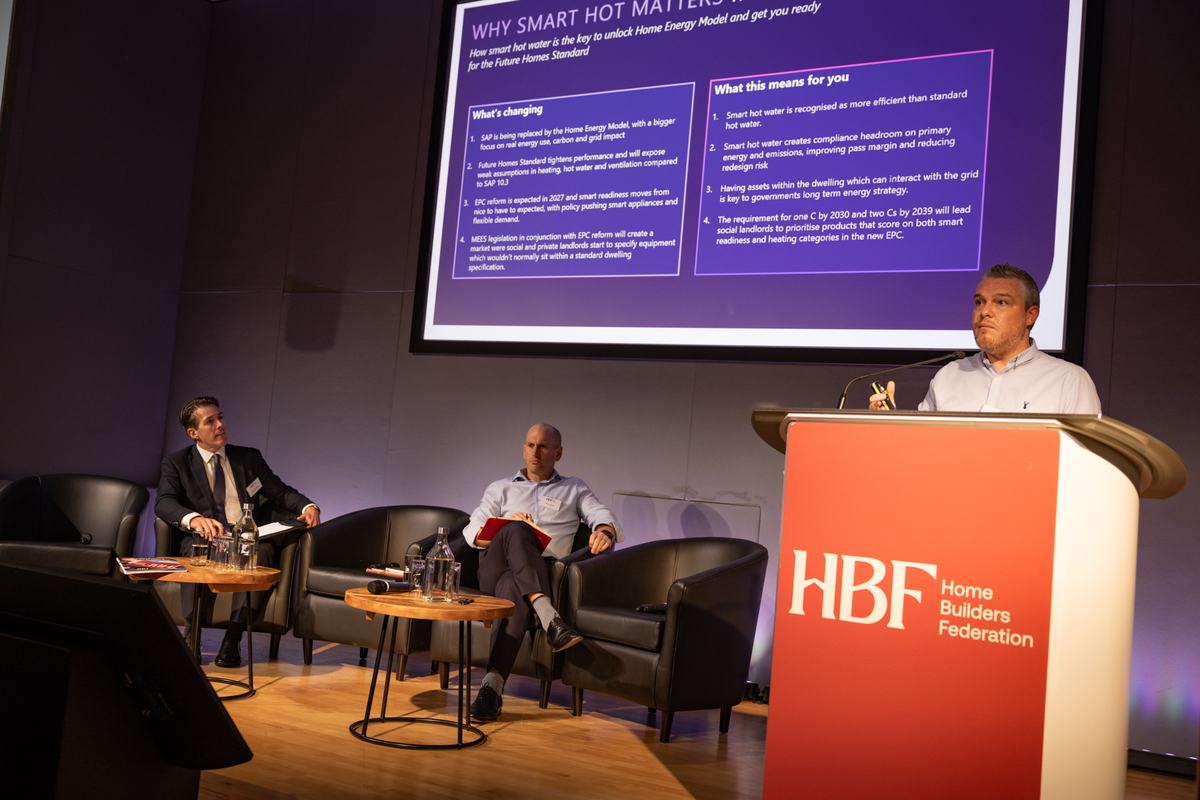
Also speaking at the conference were Peter McBride, UK sales director of Mixergy, provider of hot water solutions, Barny Evans, Turley’s director, sustainability and ESG and Dan Hicks, NHBC’s technical research manager.
Hicks spoke on building homes in a changing climate, referencing NHBC Foundation’s recent report on the subject. After two hot summers in the UK, “heat is the new construction risk”, he said. “Productivity can fall, some actions become more difficult or unsafe.”
Evans covered some overlooked aspects of homes delivery in the mission to reduce energy - chiefly mobility and quality of life. On the latter: “We’ve stopped thinking about how we engineer our homes to be the best spaces to live, work, play and enjoy ourselves.”
If you have any questions please contact the events team on events@house-builder.co.uk
HBF TECHNICAL CONFERENCE FEEDBACK FORM
If you wish to offer any feedback from the HBF Technical Conference, then please complete the digital questionnaire.
Image Gallery





















































Speaker Presentations
| Benjamin Ralph & Nathan Hooper, Hollis | Download Presentation |
| Colin Jones, HCR Law | Download Presentation |
| Ryan Mee & Claire Enstone, Eco2Solar | Download Presentation |
| Ross Holleron, Future Homes Hub | Download Presentation |
| Peter McBride, Mixergy | Download Presentation |
| Barny Evans, Turley | Download Presentation |
| Daniel Hicks, NHBC | Download Presentation |
| Callum Parker, Brookbanks | Download Presentation |
| Lee Brooks, Water Regs UK | Download Presentation |
| Martyn Neil, Wavin | Download Presentation |
| Natalie Elphicke Ross OBE, HFI | Download Presentation |
| Rhodri Williams, HBF | Download Presentation |
EXPERTS SPEAKERS AND PANELLISTS
















Sponsors






Where
Austin Court, 80 Cambridge Street, Birmingham B1 2NP